


Introduction
In November 2025, The Consciousness Foundation announced our first call for proposals: Toward A Science of Awakening. The grant program debuted in a talk by our CSO Kathryn Devaney at the meeting of the International Society for Contemplative Research, and went live on cofo.org the following day. This call served as the opening move in our broader mission to operationalize and democratize awakening.
At The Consciousness Foundation, we are using the word “awakening” to encompass the trait-level changes typically resulting from deep engagement with spiritual, contemplative, and religious practices. We propose “awakening” as an umbrella term to capture these transformations, which have been described as, for example, “stream entry,” and “enlightenment” (Buddhism), theosis and forms of “union with God” (Christianity), fana and baqua (Sufism), and concepts such as devekut in Judaism. We include our own provisional definition below, which we offer as a directional heading rather than a final draft. We aim to apply our efforts to field-building in order to facilitate a science of awakening which will iteratively update this definition as time goes on and knowledge expands.
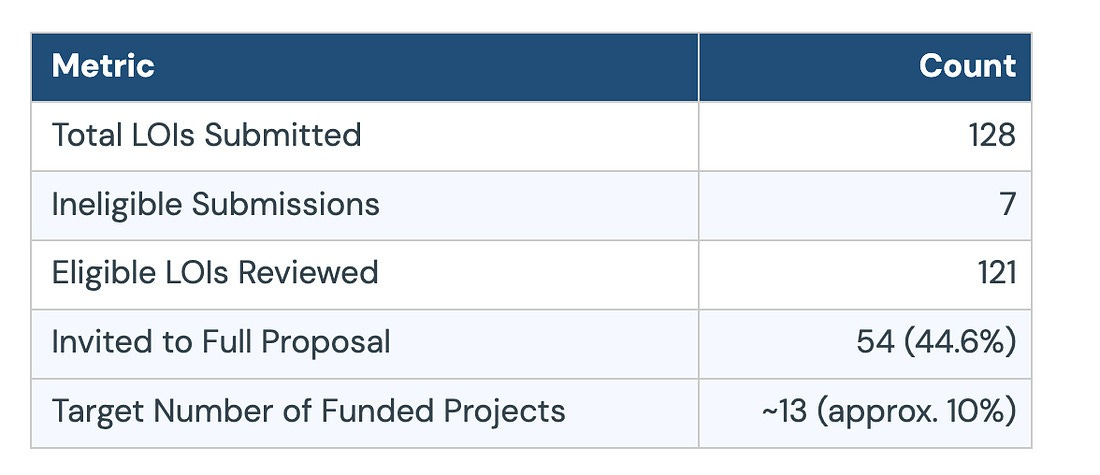
For this grant program, we employed a two-stage structure: a short letter of intent to apply (LOI), followed by an invitation-only full proposal stage. By the deadline in December 2025, we were delighted to receive 128 LOIs from researchers around the world. We’ve since invited 54 of those teams to submit full proposals, which are due next month.
A few things make this grant program unusual. In addition to receiving funding, awardees will be placed into a cohort that meets regularly over the two-year grant period to share findings, cross-pollinate ideas, and actively collaborate. Selection will reflect not only the merit of individual proposals but how well the group fits together as a whole. This first cohort is the opening chapter of a five-year, metascience-informed plan to build a genuinely flourishing field investigating the process of awakening. Our goal is to catalyze rigorous research that makes awakening legible as a scientific subject, and ultimately inspires new accessible practices, frameworks, and technologies to support it.
Here, we want to share what we learned from that first wave of submissions, both as a record of where this nascent field stands, and to ‘think in public’ about where it might go. What follows draws on patterns across those 128 letters to sketch both the current landscape and the most promising frontiers for developing a science of awakening. We’ll start with an overview, dive deeper into the methods and questions that the proposals covered (and didn’t cover) and end with some implications for the future of the field.
Application Overview
Submission Statistics
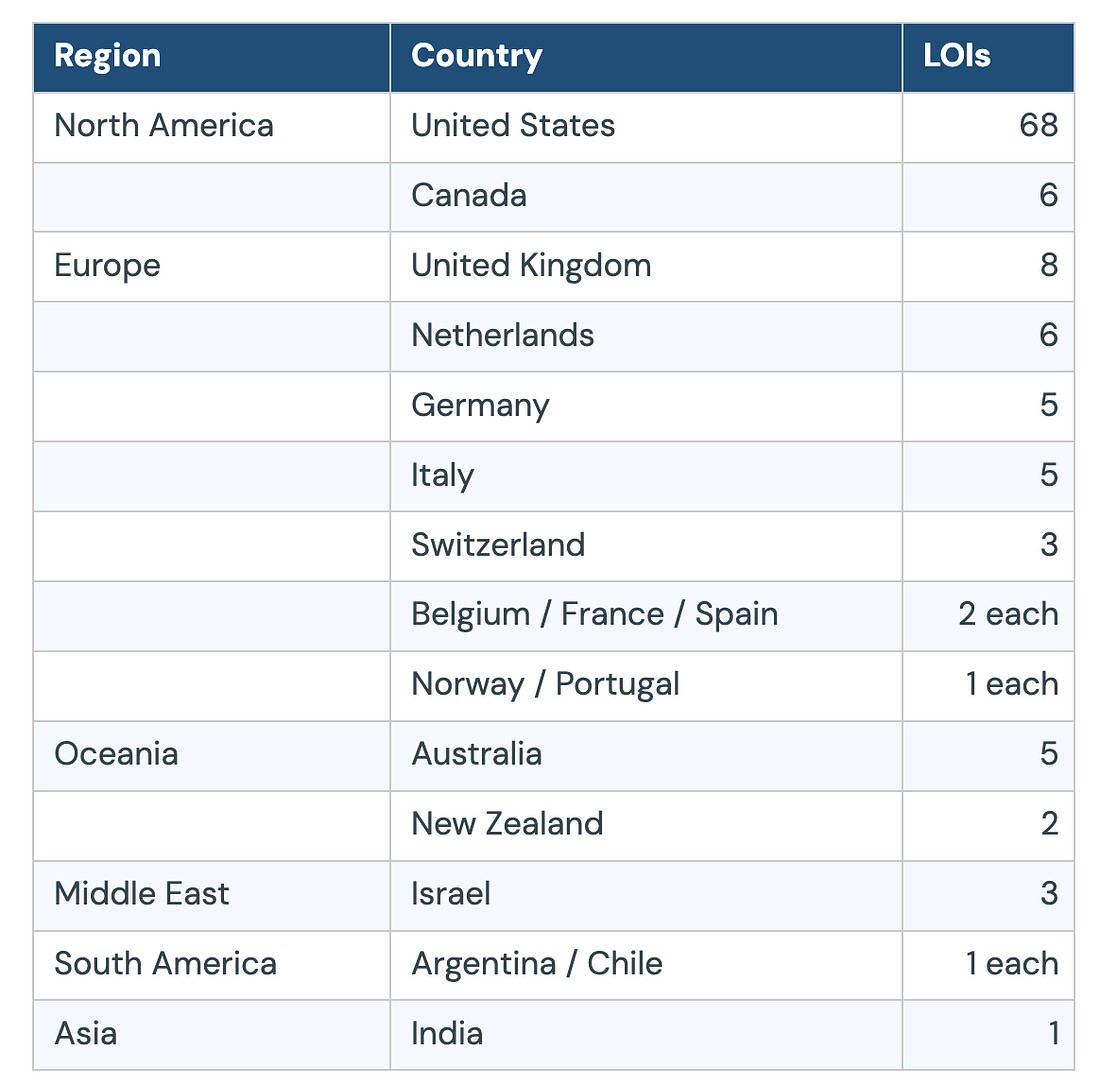
Geographic Distribution of Applicants
The program attracted submissions from around the world, demonstrating broad international interest in the science of awakening.
Awakening Definitions
Applicants were asked to provide a working definition of awakening for the purposes of their proposed research. The Consciousness Foundation’s provisional definition was included in the call for proposals as a reference point:
Awakening: a persistent and fundamental change in moment-to-moment experience, particularly of the sense of self, that correlates with perceptual and psychological changes and results in reduced suffering, greater wellbeing, and greater freedom.
The influence of this definition was evident across submissions. Many applicants incorporated its terminology or structure while extending, nuancing, or adapting it to their specific research context.
The most consistently emphasized element in the submitted definitions was a reduction in self-referential processing: applicants across traditions and methodological orientations described awakening as involving a loosening of identification with the narrative self, a diminished emphasis on self-oriented cognition in moment-to-moment experience, and an increased capacity to perceive experience without the automatic overlay of habitual meaning-making or interpretation. Closely related was an emphasis on enhanced clarity and presence, a shift toward more immediate, less conditioned awareness, as well as reduced suffering and lower psychological reactivity.
A second cluster of themes concerned the relational and expansive dimensions of awakening. Many applicants highlighted an increased sense of interconnectedness with others and the world, and several framed this in explicitly nondual terms: a dissolution of the ordinary subject-object boundary such that the separation between self and experience, or self and other, becomes less fixed or salient. Related to this was an expression of greater compassion and prosocial orientation as natural downstream effects of awakening, rather than as separate phenomena.
Perhaps the most theoretically significant area of convergence concerned the nature and stability of awakening itself. The vast majority of applicants distinguished awakening from transient peak experiences, framing it instead as a trait-level or semi-stable transformation - a durable reorganization of how experience is structured, not a passing state or peak experience. Several teams described this in terms of a phase transition or shift in baseline functioning, while others emphasized the progressive, dynamic quality of the transformation. Notably, many definitions referenced changes in the underlying structure of experience: the way experience is organized and related to, rather than simply the content appearing within it. This conceptual framing aligns closely with The Consciousness Foundation’s own provisional definition and signals a field that is developing a shared theoretical vocabulary.
Methodological Approaches
Methods Represented in the Applicant Pool
Neuroimaging was the most widely used quantitative method across the pool. EEG appeared in 51 of the 128 proposals in a range of forms including high-density arrays, hyperscanning setups, and portable devices. fMRI was the second most common neuroimaging modality at 14 proposals, covering both resting-state and task-based designs. fNIRS and OPM-MEG were proposed most rarely.
Phenomenological methods were nearly as prevalent. Twenty-nine proposals incorporated structured phenomenological protocols of some kind, while experience sampling and ecological momentary assessment (EMA) featured in 12. Microphenomenology interviews (a more intensive first-person elicitation method) appeared in 11 proposals, reflecting growing interest in fine-grained qualitative data collection alongside quantitative measures.
On the psychometric side, the most salient feature was the volume of novel scale development: 36 proposals included the creation of new instruments, pointing to a field that is actively building its measurement infrastructure. Among established tools, the Nondual Awareness Dimensional Assessment (NADA) was the most commonly used, followed by the Mystical Experience Questionnaire (MEQ) and the Five Facet Mindfulness Questionnaire (FFMQ).
Computational approaches were present in a meaningful minority of proposals. Machine learning classification appeared in 16, active inference modeling in 8, and network analysis and dynamical systems approaches in 2 each.
The range of interventions under study is diverse, spanning traditional meditation retreats, psychedelics, virtual reality, and neurostimulation. Meditation retreats featured in 22 proposals and spanned durations from 7 days to 3 years. Psychedelic-assisted approaches were included in 23 proposals total, covering psilocybin, 5-MeO-DMT, and DMT. Neurostimulation methods (tACS, TMS, and tFUS) and virtual reality experiences each appeared in 6 proposals, while breathwork was proposed in 4.
Methodological Observations
A defining feature of the applicant pool was its strong preference for mixed methods: 65% of proposals integrate quantitative measures with qualitative or phenomenological approaches, reflecting the current necessity of “bootstrapping” any quantitative third-person measure with a complementary qualitative or first-person measure.
Several notable gaps stand out against this methodological creativity. Biomarker research was limited - the large majority of proposals rely on self-report and behavioral measures, with biological markers playing a minimal role. Similarly, the study of special populations skewed heavily toward Buddhist practitioners, reflecting the field’s historical roots in contemplative neuroscience but leaving much of the extant practitioner and contemplative landscape unexplored.
Tool development was a major emphasis: many proposals include the creation of new instruments, protocols, or conceptual frameworks, which speaks to a burgeoning field actively working to build the foundational measurement infrastructure that it needs. Longitudinal designs were also common, with many proposals tracking change across weeks to years, a methodological commitment that suits the trait-level transformation most applicants are trying to capture.
One finding warrants particular attention: a substantial number of proposals sought to study advanced or awakened practitioners without specifying how those populations would be recruited, screened, or defined through inclusion and exclusion criteria. From this, we conclude that establishing clearer field-wide standards in this area is an important priority.
Implications for A Science of Awakening Field
The findings from this LOI analysis, particularly the large number of individual proposals attempting to create field-standard assessment tools, point clearly toward what a science of awakening needs most at this stage: more coordinated research. The gaps and concentrations visible in the applicant pool, methodologically, biologically, and across contemplative traditions, are unlikely to be addressed by individual labs working in isolation. Progress will require deliberate collaboration, shared infrastructure, and intentional effort to bring new tools and underrepresented methods and perspectives into the field.
Methodologically, the field would benefit greatly from expansion beyond Buddhist contemplative contexts. The dominance of Buddhist frameworks in the current research landscape likely reflects the field’s origins in Contemplative Neuroscience, rather than accurately reflecting the full scope of awakening as a human phenomenon. Traditions including Abrahamic, Indigenous, Daoist, Sufi, and other contemplative and transformational paths represent largely unstudied territory with significant scientific potential. Genuine progress toward a universal science of awakening will require intentional outreach to practitioners working within these traditions, and collaborative partnerships between researchers and contemplative teachers.
Finally, and critically, the field requires shared infrastructure in order to move forward: common definitions, measurement standards, data repositories, and consensus metrics that allow findings to aggregate and replicate across labs and contexts. Several proposals in this pool aspired to create such assets, and while most were beyond the scope of the current award, they point to a critical gap. Building these foundations and connecting the researchers best positioned to contribute to them is among the highest-leverage investments the field can make.
Conclusion
This first grant program confirmed both the promise and the earliness of the field. Across 128 letters of intent, we saw strong convergence on how to define awakening, with researchers from very different backgrounds agreeing that it’s an enduring, trait-level transformation in subjective experience (and possibly behavior), not a fleeting state. And we saw a genuine appetite to study it rigorously.
The patterns in the data also make the field’s next frontier legible. The concentration in EEG-based and phenomenological methods is probably due to the scoping of the grant program, however, the overrepresentation of Buddhist contexts likely reflects a bias in the nascent field itself. Becoming aware of this bias early permits investing in a deeper understanding of awakening by incorporating the wisdom practices of other contemplative traditions. Further coordination work will be possible in incorporating biologically grounded measures, and developing the shared standards that would let findings accumulate across labs. A striking number of proposals wanted to build assessments and metrics from scratch, which tells us that the field is aware that it needs common infrastructure, and researchers are ready to help build it.
For The Consciousness Foundation, all of this points toward coordination as the highest-leverage next move - shared definitions, stronger measurement and recruitment standards, and deliberate effort to bring underrepresented methods and traditions into the conversation. The full proposal stage will sharpen our sense of what’s most feasible and most significant, but even at this early stage we are delighted at the volume and quality of proposals we received, and optimistic that a rigorous, cross-traditional science of one of humanity’s most transformative experiences is now possible.
This is the first update of what will be an ongoing series as the program unfolds - we’ll share more as the full proposals come in and the cohort takes shape. If you’re a researcher, funder, or contemplative teacher who sees yourself in this work, we’d love to hear from you: hello@cofo.org
very exciting :) good luck!
How much funding has CoFo distributed so far, and how quickly?